
A successful Odoo implementation starts with clear business goals, a manageable first phase and agreed responsibilities. The practical work moves from reviewing existing processes to preparing data, configuring the system, testing, training and going live. Further improvements follow from experience with the system.
The aim is to connect daily operations, finance and the information management needs. When a quotation, order, delivery and invoice form a working process, the same data supports several tasks and reduces manual consolidation.
Let business goals guide the implementation
Choose two or three concrete goals for your Odoo project. These might include faster invoicing, more reliable inventory information or less manual work in monthly reporting.
The goals help determine what to implement first. For a project-based business, the priority may be connecting time, costs and invoicing. For a trading or importing company, it may be purchasing, inventory and deliveries.
Record the starting point as well. If the goal is faster invoicing, establish how long it currently takes to issue an invoice after a delivery or project is completed. This gives you a basis for assessing the benefits later.
Five stages of an Odoo implementation
A phased implementation means defining a first release that works as a complete process. Its scope depends on your business processes, data migration, integrations and the time your team can commit.
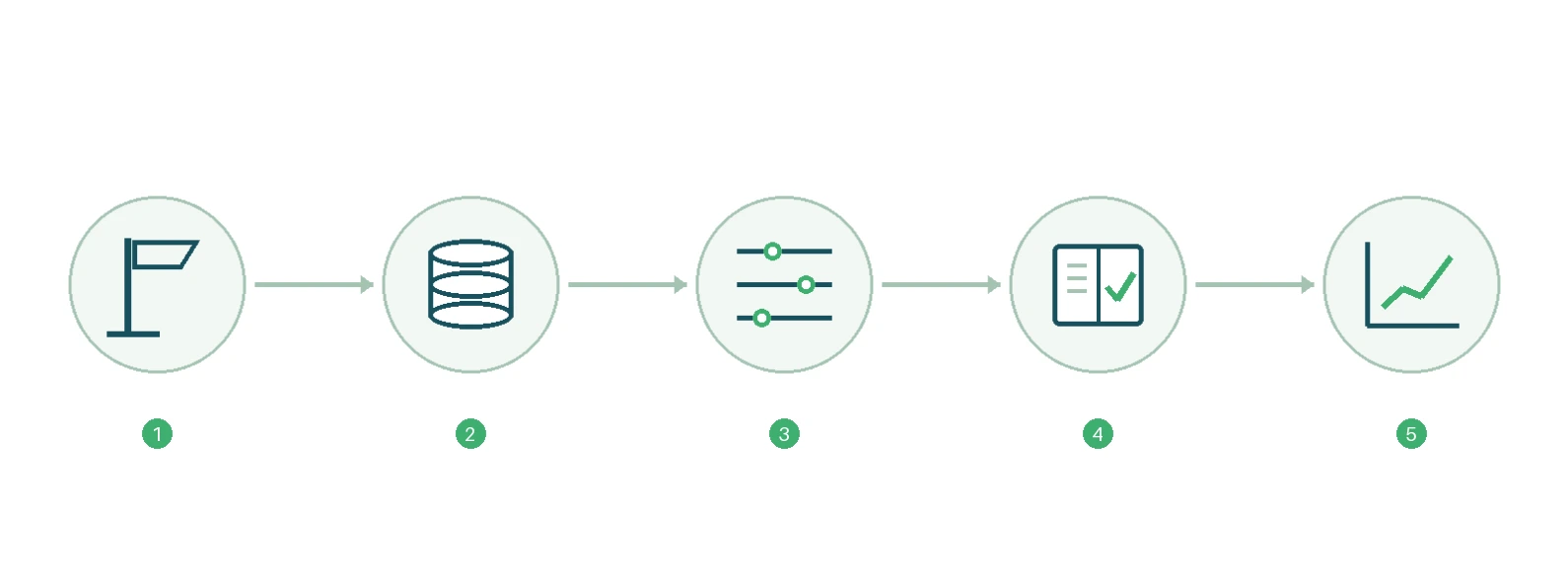
1. Review your processes and define the first phase
Follow the flow of information from quotation to order, delivery, invoicing and accounting. Identify duplicate entries, waiting times and tasks where information depends on one person.
Choose a complete process for the first phase. This could be quotation–order–delivery–invoice or purchase–receipt–supplier invoice. Establish which existing systems will remain in use and what connections they need.
2. Prepare your data and agree responsibilities
Customer records, products, price lists, delivery terms and project structures directly affect daily work and reporting quality. Finance preparation may also include the chart of accounts, outstanding invoices and opening balances.
Decide which data to migrate and where historical records will remain accessible. Check the quality of the migration data before going live.
Assign responsibilities too: who maintains product data, approves purchases, checks financial information and makes decisions about project scope?
3. Configure Odoo and test the complete process
Use Odoo’s standard functionality wherever it meets the requirements. Assess separately the needs that require integration or custom development.
Test the agreed process using data that represents your actual business situations. In sales, include different prices, partial deliveries and credit notes. For projects, check how work, costs and invoicing connect.
Use a separate test environment. Users from sales, inventory, projects and finance should validate their own tasks. Check the agreed data migration and integrations as part of the testing.
4. Train users and prepare for go-live
Training should reflect each person’s daily responsibilities. A salesperson needs to process an order, a warehouse user needs to record a receipt, and a finance user needs to check that transactions are correct.
Before launch, agree the go-live date, final data migration, validation checks and initial support arrangements. Define when entries in the old system will stop.
The company’s project owner approves go-live once the agreed processes have been tested, the necessary data checked and users prepared.
5. Review actual use and plan the next phase
After go-live, collect user questions and monitor how the processes work. These observations help distinguish training needs, configuration issues and new development requests.
Once the first phase works and produces reliable data, use that experience to define the next phase. Development can then focus on demonstrated business needs.
Include finance from the start
Sales, purchasing, inventory and project transactions affect finance. Involve financial expertise in the project definition from the beginning.
For example, the connection between delivery and invoicing affects when a receivable is created and when payment can be expected. In a project business, the way time and costs are recorded affects profitability reporting.
Including finance early does not require moving all accounting into Odoo in the first phase. A company may implement Odoo Accounting or retain its existing accounting system. What matters is agreeing the responsibilities of each system, data transfers and reconciliation checks.
Keep scope and decisions clear
The company should appoint an Odoo project owner with authority to make decisions. The implementation partner helps assess options and deliver the solution, while the company decides its goals, ways of working and priorities.
Separate new requests from the requirements agreed for the first phase. Assess each change for its business value and its effect on cost and timing.
Custom development may be justified by an essential process requirement. First, assess whether standard functionality or a change in the working process can meet the need.
Measure workflow and data quality
Assess the implementation against the goals established at the start. Useful measures include:
- Time from delivery or project completion to invoicing.
- Inventory record accuracy.
- Supplier invoice processing time.
- Timeliness of project time entries.
- Time needed to complete monthly reporting.
Compare results with the starting point using consistent measurements. If users still maintain parallel spreadsheets, investigate whether they need training, a process adjustment or a more useful report.
Build a foundation for management information
Once daily processes produce reliable data, that information can support reporting, budgeting and forecasting.
Revise EPM is a company management system within the Odoo environment. It can be considered when a business needs a connected approach to budgeting, forecasts, cash flow and management metrics. Its implementation is a separate development phase, scoped around the company’s needs.
Revise combines Odoo expertise with an understanding of business processes and finance. Our approach emphasises standard functionality, a working first phase and further development based on practical needs.
Planning an Odoo implementation? Contact Revise to discuss your goals and the right scope for your first phase.