Budgeting as part of continuous management
The budget transforms the company's goals into euros and concrete plans.
the continuous management of the company.
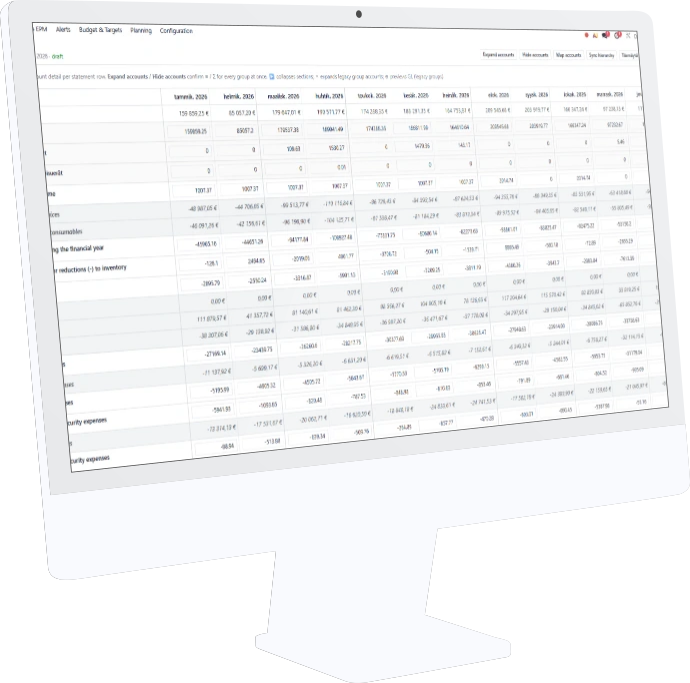
Turn goals into a concrete plan
Budgeting connects the company's goals with the resources available. Growth targets, sales, headcount, investments and costs can be turned into a single financial plan whose progress can be followed.
1
Goals
What is the company aiming for?
2
Resources
How are people and money used?
3
Financial impact
How do the plans affect the income statement, balance sheet, and cash flow?
4
Monitoring
Is the plan being realised?
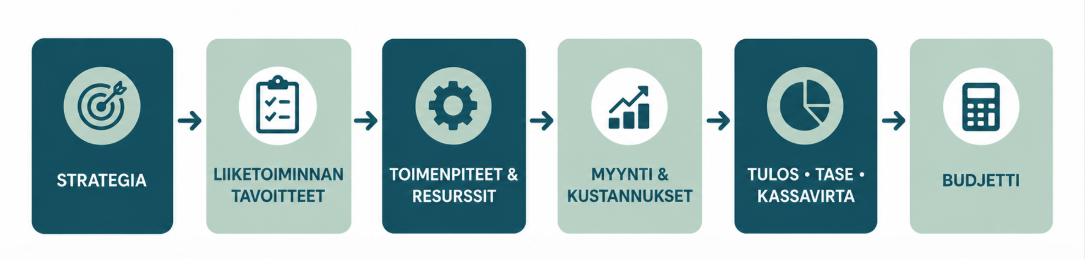
Build your company's budget based on the business
Sales
Costs
Plan fixed and variable costs and their development.
Personnel
Consider the impact of personnel and personnel changes on the company's costs.
Investments
Plan investments and their financial impacts.
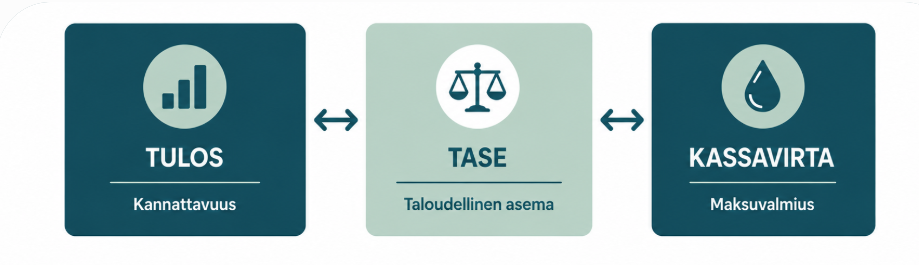
See the impact of the plan on the entire financial picture
a comprehensive picture of the company's financial development.
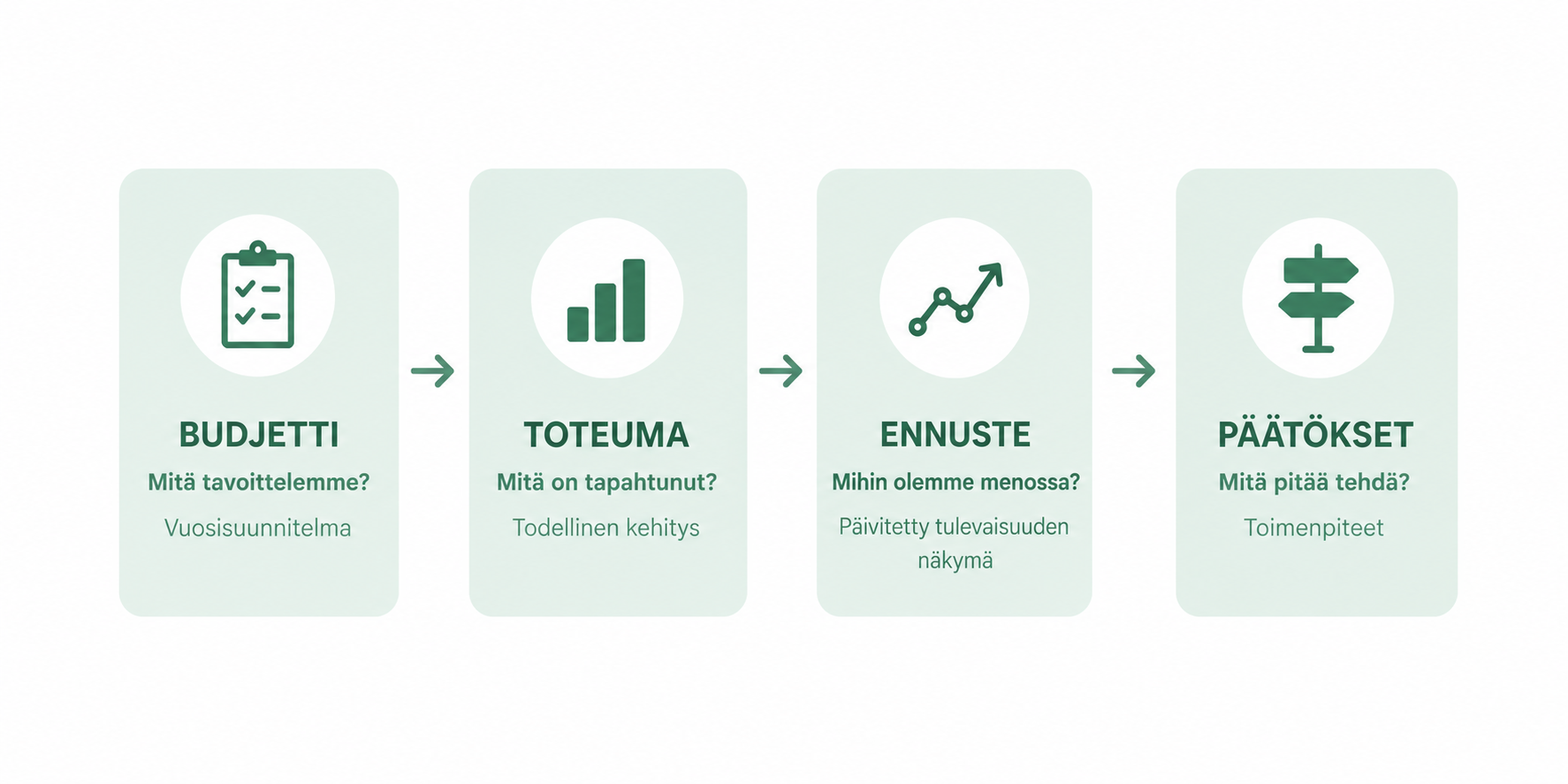
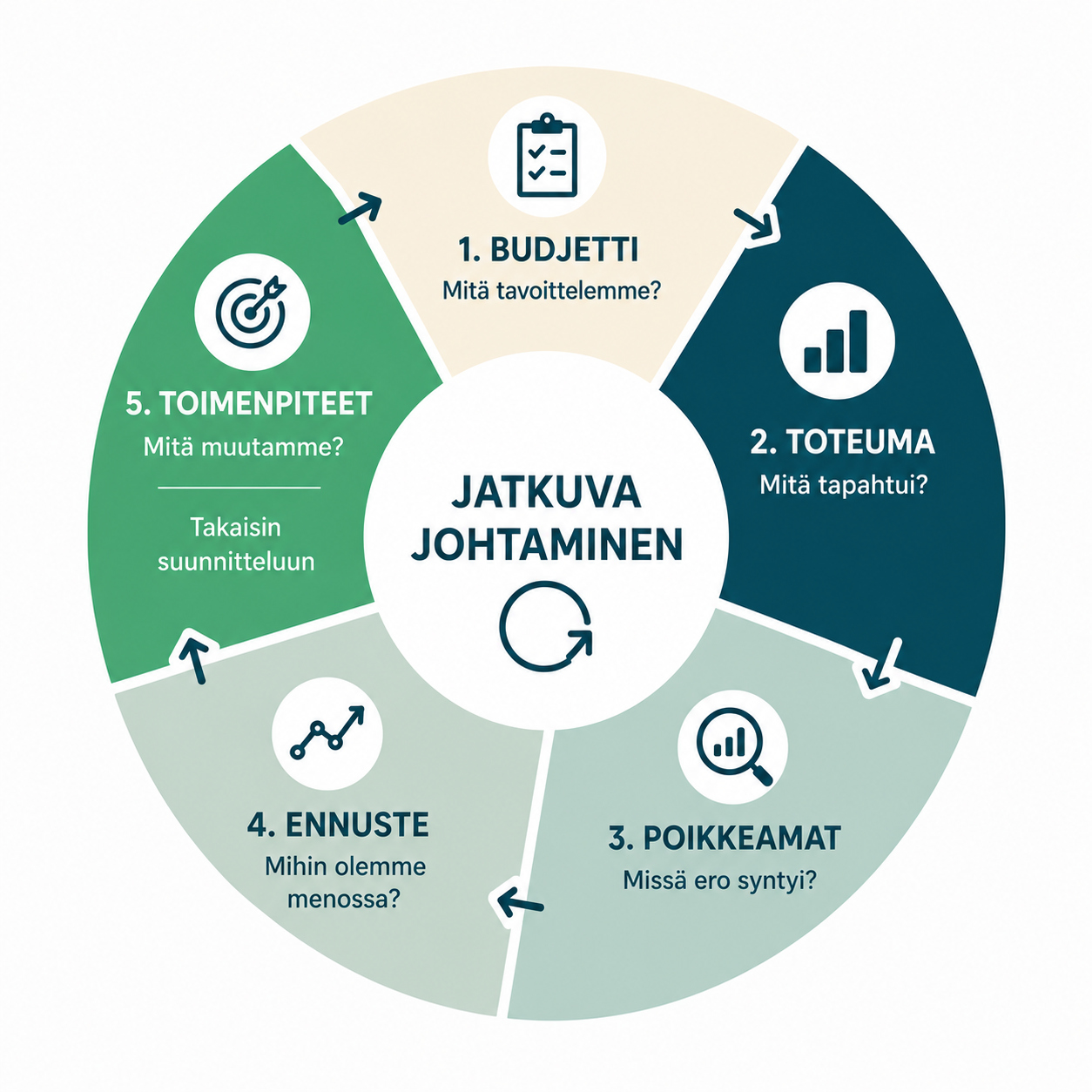
The budget tells the plan – the forecast tells where you are going
Therefore, a continuously updated forecast is needed alongside the budget.
Continuous budgeting cycle
Prepare for alternative futures as well
One plan is not always enough. Different versions and scenarios of the budget can be used to assess alternative development paths and their impacts on the company's economy.
Base scenario
Business develops as planned.
Growth scenario
Sales grow faster than planned.
Cautious scenario
Demand or profitability develops worse than expected.
A single entity for business management
Revise EPM connects the company's planning, goals, actuals, and metrics for management use.
Reporting
Connect actuals and comparisons for management use.
Analytics
Identify deviations, trends, and areas for development.
AI & management support
as features develop.
Make the budget a continuous part of company management
Revise EPM combines budgeting, actuals and forecasts into a single management entity. See where your company stands, compare progress to goals and update the future outlook as the business changes.