Strategic management – from strategy to practical action
Strategy creates direction. Results arise when goals are turned into plans, responsibilities
into a cohesive management framework.
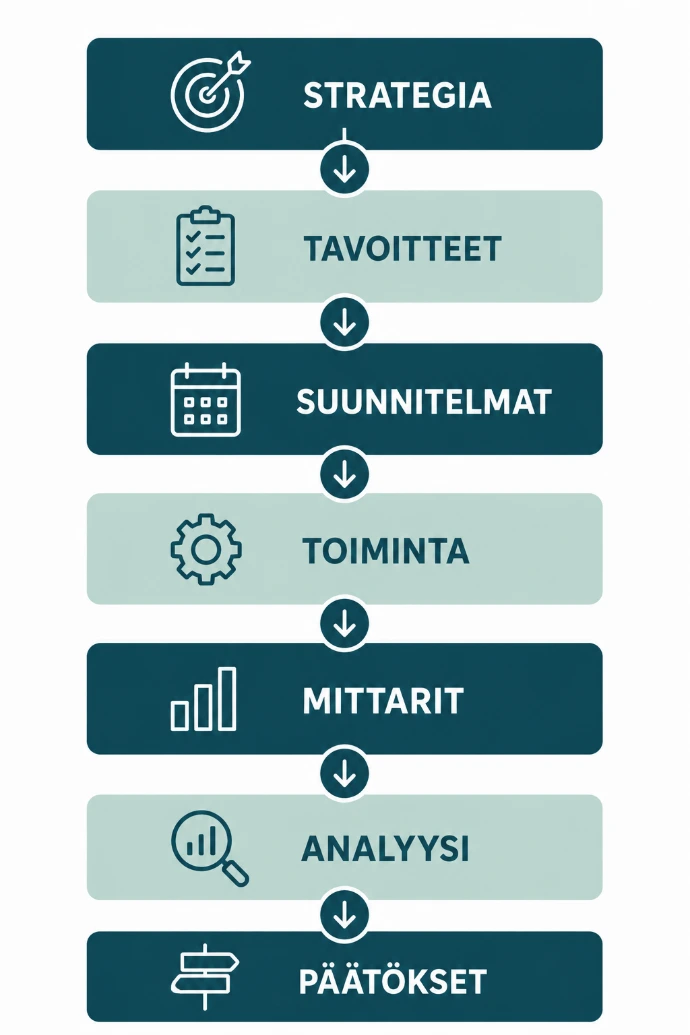
The value of strategy comes from execution
Strategy defines where the company wants to go. The role of management is to turn this direction into concrete goals, plans, and actions. The challenge easily arises when strategy, financial planning, and operational activities exist separately from each other.
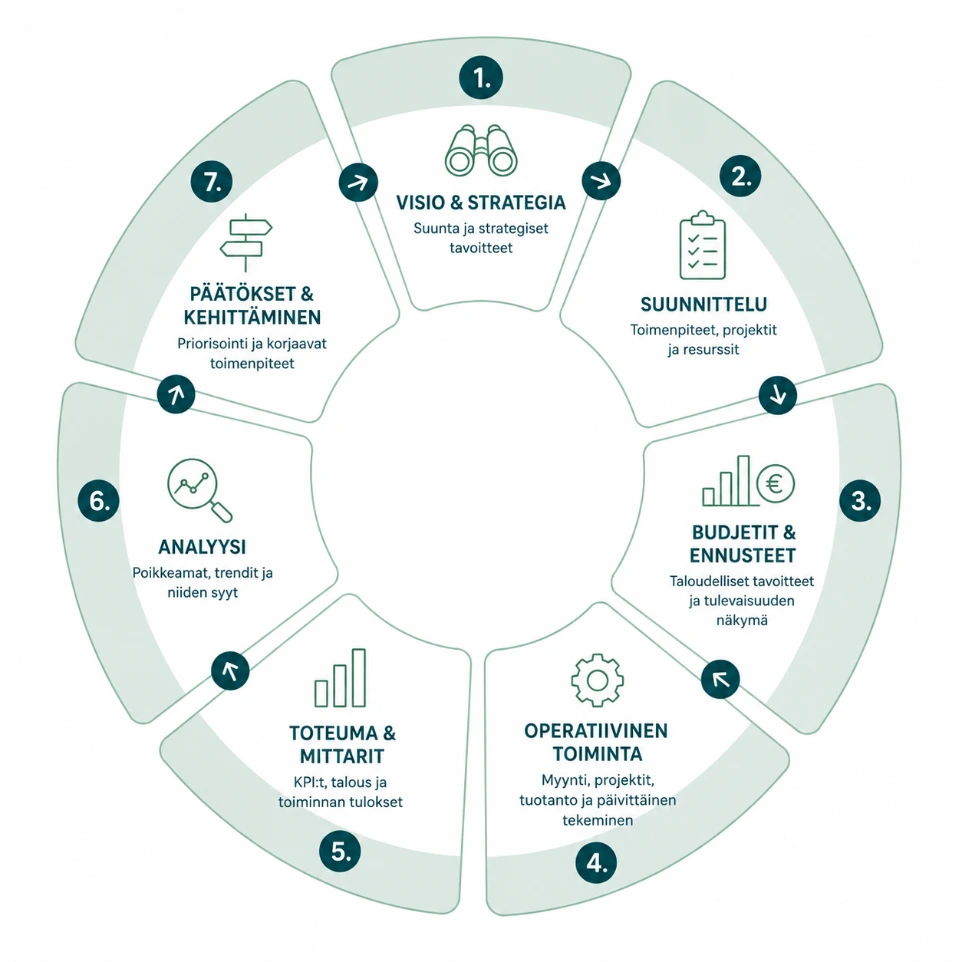
Revise EPM helps combine goals, planning, outcomes, and metrics into a continuous management process.
✔ What are our goals?
Strategy and goals define the direction.
✔ What should we do?
Objectives are translated into actions and plans.
✔ Where are the resources allocated?
Budgets and plans turn strategic choices into concrete actions.
✔ How do we measure success?
KPIs and other metrics show progress.
✔ Where are we heading to?
Forecasts bring the future into management.
✔ What should be changed?
Deviations and analysis guide decisions.

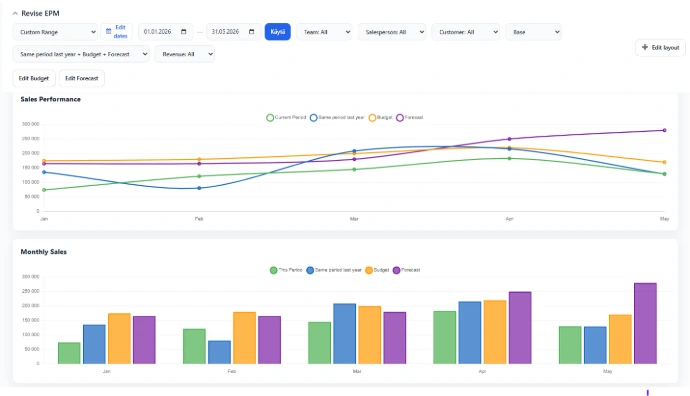
Connect goals to measurable actions
Metrics can relate to, for example:
✔ sustainability
Turn goals into a financial plan
Strategy and economic planning go hand in hand. Growth, investments, staff, new markets, and other strategic choices affect the company's revenue, costs, profitability, balance sheet, and cash flow.
Revise EPM helps to align business goals:
2
Forecasting
Update the view of the future based on actuals and the changing business situation.
3
Cash flow
See the impact of financial decisions on the company's liquidity as well.
Look forward, not just backward
With these, management can consider four questions:
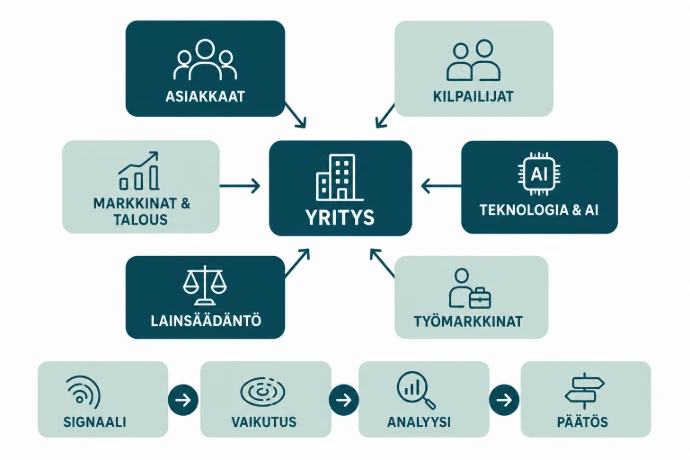
A business is not managed in a vacuum
Changes can affect the company's goals, plans, and forecasts. In strategic management, the company's own information must therefore be examined
in relation to the changing operating environment.
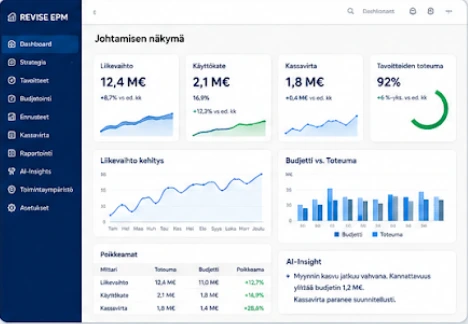
A comprehensive approach to company management
Revise EPM connects the company's planning, goals, outcomes, and metrics for management use.
Strategy & goals
Align the company's direction with measurable goals.
KPIs & dashboards
Track essential business metrics.
Budgeting
Convert goals into a financial plan.
Forecasting
Keep the future outlook continuously up to date.
Reporting
Connect outcomes and comparisons for management use.
Cash flow
Connect outcomes and comparisons for management use.
Analytics
Identify deviations, trends, and areas for development.
AI & management support
as features develop.
Make strategy a continuous part of company management
outcomes into a whole that supports the company's ongoing management.